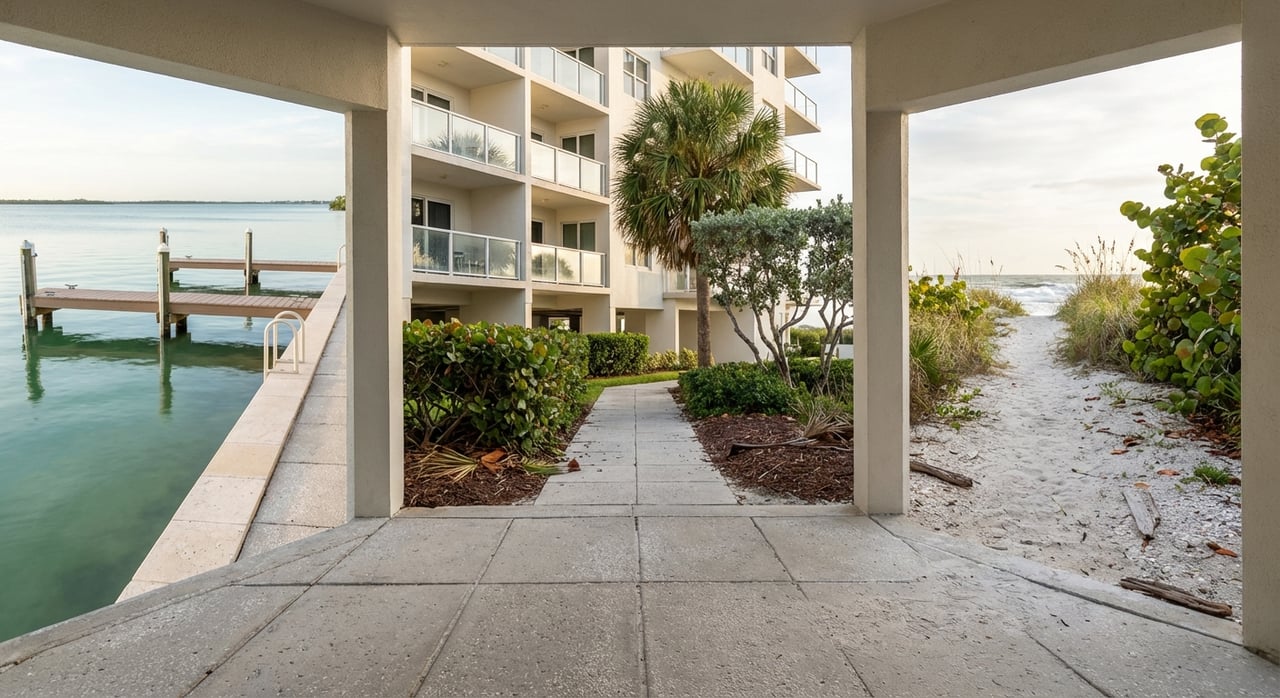
Choosing between a beachfront and a bayfront condo on Siesta Key can feel like picking your favorite kind of paradise. Do you want wide‑open Gulf sunsets and sand at your doorstep, or a calm marina-style lifestyle with docks and easy boating? Both deliver the island vibe, yet they live very differently day to day. This guide breaks down the tradeoffs so you can match the right view, amenities, and ownership details to your goals. Let’s dive in.
What “beachfront” vs “bayfront” means here
Beachfront basics
Beachfront on Siesta Key means Gulf-facing. You typically get direct sandy access, big-sky sunset views, and stronger wave action. Many buildings near Beach Road and Crescent Beach lean into resort-style amenities and high vacation demand. Expect more exposure to ocean-driven storms and active beach management over time.
Bayfront and canal living
Bayfront or canal-side faces Sarasota Bay or the Intracoastal and the island’s interior waterways. You usually see calmer water, morning sun, and practical perks like docks, slips, and protected conditions for kayaking or paddleboards. You trade some wide Gulf views for boating utility and often better value per square foot. Flood zones still apply, so you will want to check a specific building’s elevation and risk.
Price and value trends to expect
Siesta Key’s waterfront carries a premium over inland properties. Within waterfront, direct Gulf-front exposure usually commands the highest per‑square‑foot pricing. Recent high-end gulf-front listings have asked more than $1,000 per square foot, illustrating the view premium. By comparison, many bayside or canal buildings sell at lower prices per square foot, unless they include prime dockage or yacht-basin access.
For apples-to-apples comparisons, always look at comps inside the same building with similar views and renovations. Gulf-to-bay communities can blur the lines because you can choose a beach or bay orientation within one HOA. If you care most about long views and step-to-sand access, the premium can be worth it. If you value boating and practical amenities, bayside often stretches your budget further.
Rentals and local rules
City vs County rules shape rental potential
Siesta Key falls under two sets of rules, and the boundary matters. Inside the City of Sarasota, vacation rentals require a certificate and follow a minimum 7-night stay for qualifying properties. You can review the City’s Vacation Rental requirements on the official page at the City of Sarasota’s website for vacation rentals. In unincorporated Sarasota County, the Unified Development Code generally limits leases under 30 days, but many multi-family properties on the barrier islands are exceptions where short-term rentals are allowed subject to licensing and HOA rules. A helpful primer on the county’s approach is outlined by the Realtor Association of Sarasota and Manatee.
- City of Sarasota vacation rental rules: Vacation Rental Certificate and minimum-stay guidance
- Sarasota County framework and exceptions: Rental restrictions overview
Always verify the property’s jurisdiction, zoning, and the condo’s specific rental policy. HOA rules can set minimum stays and caps that override what’s possible even if the city or county allows it.
Taxes you must plan for
If you plan to rent, you will need to register and collect taxes. Sarasota County’s Tourist Development Tax is commonly cited at 6 percent and is collected on short-term stays, in addition to state sales tax and any local surtax. You can confirm the county’s bed tax rate and trends in the FGCU TDT dashboard. Platforms may collect some taxes, but the operator is responsible for proper filings.
Seasonality and performance
Siesta Key runs on a seasonal clock. Peak demand typically arrives in late fall through spring, with higher average daily rates and occupancy. Some seasons see softer forward bookings, so you will want building-specific rental history or a pro forma from a local manager to model cash flow. For broader context on recent tourism patterns, see Sarasota Magazine’s coverage of shifting demand.
Storm, flood, and building safety
Understand flood maps vs storm surge
Flood zone and storm surge are related but not identical. Start by checking a specific address in the FEMA Flood Map Service Center to see the building’s flood zone and base flood elevation. For scenario planning around surge, use the National Hurricane Center’s storm surge maps. Gulf-facing buildings often sit in higher-exposure zones with wave energy, while bayside and canals can still flood from surge that funnels through the passes.
Beach renourishment and shoreline management
Beachfront ownership benefits from active shoreline management, but it is not set-and-forget. Siesta Key has seen notable renourishment and repair work, including projects in 2016 with continued funding and monitoring phases as recent as 2023. Local coverage of funding for South Siesta projects can help you track future maintenance and potential assessments. See reporting on county-backed renourishment efforts.
Insurance, reserves, and today’s condo rules
Condo insurance is a package. Associations often carry a master flood policy under the NFIP’s Residential Condominium Building Association Policy. Owners then carry an HO‑6 for interior coverage and should consider higher loss-assessment limits to help cover large master-policy deductibles. For an overview of RCBAP’s role, review FEMA’s RCBAP guidance. For owner-level considerations in Florida, this primer on condo owners insurance is a useful read.
Florida strengthened building codes in the early 2000s and added new milestone inspection and structural reserve requirements for multi-story condos after Surfside. As a buyer, ask for recent structural reports, milestone inspection status, reserve studies, and any planned capital projects or assessments. Lenders and insurers look closely at these, and they directly affect your total cost of ownership.
Amenities and access: lifestyle tradeoffs
If you love the beach
Beachfront condos tend to offer direct or deeded beach access, beachside pools, and effortless sunset watching. These properties cater to the classic beach vacation feel and often see strong nightly or weekly demand where allowed. Parking and crowd patterns can be busier near public access points, especially in peak season.
If you love boating
Bayfront and canal communities often deliver docks or slips, calmer water, and easy routes to the Intracoastal. You can launch a paddleboard at sunrise, fish in protected water, and avoid open-Gulf wave action most days. Your due diligence should include dock assignments vs waitlists, slip size, seawall condition, and any dredging or maintenance plans.
Getting around the island
North-central Siesta Key near the Village is highly walkable to shops and dining, while the south end near Turtle Beach feels quieter and more residential. A free island trolley and county buses help owners and guests move around without a car, which can be valuable for weekly renters and winter visitors.
How to choose: a quick framework
- Pick beachfront if step-to-sand access, sweeping Gulf views, and a classic resort atmosphere top your list. Budget for higher per‑square‑foot pricing and possibly higher insurance and maintenance exposure.
- Pick bayfront or canal if you want dockage, calm-water recreation, and often better value per square foot. You give up some wide-open Gulf views in exchange for practical boating utility and sunrise vistas.
- For investors, start with jurisdiction and HOA rules. Weekly or seasonal rentals often perform well where legal and supported by the association. Model net yield after HOA dues, management, insurance, taxes, and reserves.
Buyer due-diligence checklist
Use this list when you zero in on a building or two. The right documents will confirm value and reduce surprises.
Jurisdiction and zoning. Confirm whether the property sits in the City of Sarasota or unincorporated County and understand the minimum-stay rules and registration steps in each. Review the City’s vacation rental requirements and the County’s framework via this rental restrictions overview.
Association rental policy. Read the CC&Rs and bylaws for minimum stay, caps, and approval process. A local “condo guide” directory can help you find building references and contacts, such as this Siesta Key condo guide.
Flood zone and elevation. Pull the specific address in the FEMA Flood Map Service Center. For ground-level units, ask for the elevation certificate. Verify whether the association carries an RCBAP and the coverage limits.
Structural reports and reserves. Request milestone inspection results, structural or engineering reports, recent reserve studies, annual budgets, and any planned or pending special assessments.
Insurance and deductibles. Get sample HO‑6 quotes and ask the association for master-policy hurricane deductibles. For context on coverage, review FEMA’s RCBAP overview and a Florida-focused condo owners guide.
Storm-surge exposure. Use the National Hurricane Center’s surge maps for a scenario-based view of regional surge risk.
Beach management history. For beachfront buildings, check county beach plans and past renourishment. Local reporting on funding and timing for South Siesta projects provides useful context.
Dock and boating rights. On bayside or canal properties, confirm whether slips are deeded or assigned, the current waitlist, lift permits, and seawall condition. Ask about dock maintenance funds and past repairs.
When you stack these items side by side, the right choice usually becomes clear. If your heart says sunsets, prioritize beachfront and prepare for their unique maintenance realities. If your lifestyle is boat-first, favor bayside and make dock rights and seawall health central to your offer terms.
Ready to compare specific buildings and understand the details that affect pricing, insurance, rentals, and resale? Connect with Pamela Hagan for a private, data-driven consultation grounded in four decades of Sarasota waterfront expertise.
FAQs
Which has better rental potential on Siesta Key?
- It depends on jurisdiction and HOA rules; the City often allows weekly stays with registration while many County condo buildings also allow short-term rentals, and weekly-friendly buildings near the beach tend to see strong demand where legal.
How do flood zones affect condo ownership on Siesta Key?
- Many waterfront buildings sit in Special Flood Hazard Areas, so lenders may require flood coverage; check the address in FEMA’s map center and verify the association’s master flood policy and deductibles.
Are beachfront condos riskier in storms than bayfront?
- Beachfront buildings face direct Gulf wave energy and may incur higher wind or flood exposure, while bayside and canals can still flood from surge that moves through the passes, so always review surge maps and building elevation.
What should I ask about docks for a bayfront or canal condo?
- Confirm whether slips are deeded or assigned, slip size and lift limits, waitlists, seawall condition, and who funds dock maintenance or dredging.
Do I need to collect local taxes if I rent my condo short term?
- Yes; short-term operators typically register and collect state sales tax plus Sarasota County’s Tourist Development Tax, then file as required.
How close are most condos to Siesta Key Village?
- Many north-central buildings are a short walk or trolley ride to the Village, while the south end near Turtle Beach is quieter and usually a short drive to shops and dining.