Ask anyone who has toured a resale condo on Longboat Key this year what a listing agent tells them about the building's milestone inspection, and you'll hear some version of the same sentence: it passed. Every building on the island that came due for its inspection this cycle passed. That fact made local news earlier this year, and it should be reassuring. It is also, on its own, close to useless for the decision you're actually trying to make.
A passed milestone inspection tells you the building won't fall down. It does not tell you what your HOA dues will look like in eighteen months, or whether your building's board is about to send every owner a bill for six figures. That second question lives in a different document, one far fewer buyers ask to see before they write an offer.
"Passed" Only Answers One Question
Longboat Key's Planning, Zoning and Building Director, Allen Parsons, confirmed that 198 buildings on the island required milestone inspections under Florida's post-Surfside safety law, and all of them passed. Of those 198, only two were flagged for a deeper Phase 2 structural review. That is a genuinely strong result for an island where most of the high-rise inventory dates to the 1970s and 1980s.
Longboat Key Mayor Debra Williams has heard the flip side of that success from residents directly. As she put it, condo owners are seeing costs rise because "there are a lot more of these reserve items that they have to fund" than in years past. The inspection confirms the building is structurally sound today. It says nothing about how the association plans to pay for the roof, the plumbing risers, or the waterproofing system over the next decade, and that funding plan is where the real financial exposure sits.
The Document That Actually Predicts Your Closing Costs
The milestone inspection has a sibling requirement called the Structural Integrity Reserve Study, or SIRS, and this is the document that matters more to a buyer's wallet. A SIRS evaluates eight structural categories, roof, load-bearing structure, fire protection, plumbing, electrical, waterproofing, windows and doors, and any other item over a set dollar threshold (adjusted each year for inflation, and set at just over $25,675 for 2026) that affects those systems. It then produces a funding schedule showing how much the association needs to be setting aside each year to cover those components when they fail.
For years, Florida condo boards could vote to waive that funding and keep dues artificially low. That option is gone. Under HB 913, associations with budgets adopted on or after January 1, 2025 can no longer waive or reduce reserve funding for SIRS-identified components, and funding under the new schedule was required to begin January 1, 2026. Buildings that spent a decade skipping reserve contributions are now required to catch up all at once, either through higher monthly dues or a one-time special assessment.
That is the mechanism behind the assessment notices Longboat Key owners have been opening this year. It has nothing to do with whether the building passed its milestone inspection. It has everything to do with whether the association was honest about reserve funding before the law took the waiver option away.
Three Buildings, Three Points in the Same Cycle
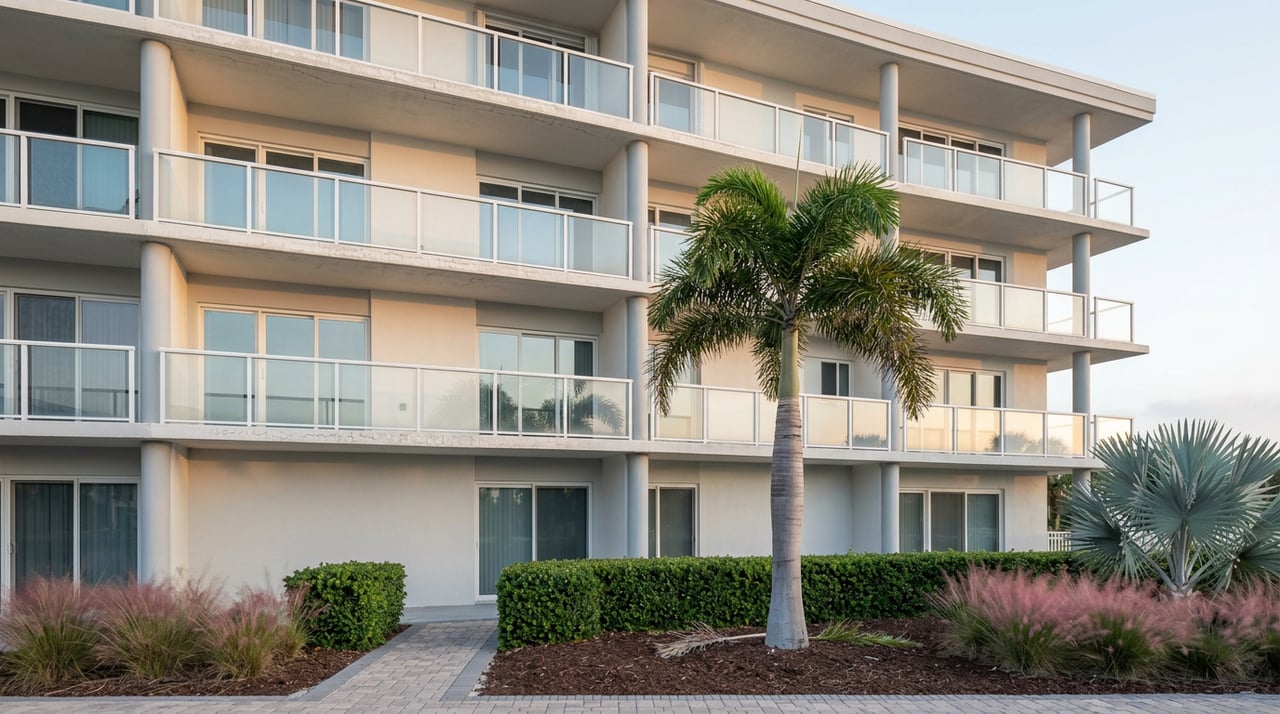
South Longboat Key carries the island's heaviest concentration of condo inventory, and its buildings span five decades of Florida construction practice. Three well-known buildings illustrate how differently that inspection and reserve timeline lands depending on when a building was built.
| Building | Year Built | Age as of 2026 | What That Age Means Under Florida's Milestone Law |
|---|---|---|---|
| Longboat Key Towers | 1970 | 56 years | Decades past the 30-year trigger point, meaning any deferred maintenance has had the longest possible runway to compound |
| Beaches of Longboat Key | 1984 | 42 years | Well past the 30-year trigger, likely already through its first mandatory inspection and SIRS funding cycle |
| Regent Place of Longboat Key | 1995 | 31 years | Just crossed the 30-year trigger, making it among the newest buildings on the island to face this requirement for the first time |
None of this means any one of these buildings is a bad purchase. It means the conversation you need to have with each association differs depending on how long that building has been operating under the new funding rules versus how recently it arrived there. A buyer's job is to ask, not assume: how long has the SIRS funding plan been in place, and what does the reserve balance look like today.
What the Price Tag Doesn't Include
Longboat Key's condo market is no longer one market. Buildings that have completed their inspections, finished any required repairs, and can show healthy, fully funded reserves are finding buyers without much friction. Buildings still working through structural findings or facing a known upcoming assessment are sitting on the market longer and absorbing larger price cuts to move at all.
As of mid-2026, entry-level condos on the south end, where much of the 1970s and 1980s inventory sits, list in roughly the $400,000 to $700,000 range. That number by itself tells you almost nothing about what you'll actually pay to own the unit. Once you add HOA dues, a pending or freshly levied special assessment, and windstorm and flood insurance, the total monthly carrying cost of that lower-priced unit can land close to what you'd pay for a similarly sized unit in a newer, better-reserved building a few blocks away. The sticker price is the smallest part of the decision. The reserve study is the part that decides your actual monthly number for the next several years.
Before You Write the Offer
Every condo engagement I run on Longboat Key starts with the same request to the seller's association, well before we're deep into an inspection period.
- The most recent milestone inspection report, Phase 1 and Phase 2 if applicable
- The current SIRS, including the percent-funded figure for each of the eight structural components, not just confirmation that a study exists
- The last 12 to 24 months of board and membership meeting minutes, to see whether special assessments have been discussed or already approved
- The current master insurance policy and declarations page, including wind and flood deductibles
- Any record of pending litigation, code enforcement notices, or insurance claims tied to structural issues
Associations with 25 or more units are now required under HB 1021 to post their governing documents, budgets, and reserve studies to a website or app, which makes most of this easier to obtain than it was even a year ago. If a board resists sharing this before you're under contract, treat that as information in itself.
The Insurance Domino
There is a financing wrinkle worth knowing before you fall in love with a unit. Citizens Property Insurance Corporation is now prohibited from issuing or renewing policies for condo owners or associations unless the building complies with both the milestone inspection requirement and its SIRS obligations. Private carriers have largely adopted the same standard, and many now ask for a SIRS summary or a compliance affidavit before they'll even quote a policy. If a building is behind on either requirement, insurance becomes harder and more expensive to place, which can complicate your financing timeline even after the purchase contract is signed.
A Few Questions Worth Settling Early
Does a passed milestone inspection mean the building won't face a special assessment? No. The inspection measures structural safety at a point in time. The SIRS and the association's funding history determine whether an assessment is coming.
How do I find the percent-funded figure for a specific building? Request the current SIRS directly from the association, or ask your agent to pull it as part of the document request before your inspection period starts. The Florida Department of Business and Professional Regulation also maintains a statewide database of submitted SIRS reports.
Is a building with a recent special assessment automatically a bad buy? Not necessarily. A building that has already absorbed its catch-up assessment and is now fully funded may carry less future risk than one that hasn't started the conversation yet.
Longboat Key's condo stock is some of the most desirable on the Gulf Coast, and the inspection results this year confirm the bones are sound. The number that decides whether you buy with confidence or get a surprise bill next spring isn't on the milestone report at all. It's in the reserve study, and it's worth reading before you write the offer, not after you close.
If you're evaluating a specific Longboat Key building and want a plain-language read on its inspection history, reserve status, and where it sits in this cycle, Pamela Hagan will walk through the documents with you before you write an offer. Request a Private Consultation to get started.